
Early Warning for Critical Infrastructure: How OSINT and AI Reduce Time-to-Detection
Dec 17 2025
Written By Kirby Plessas
Critical infrastructure incidents rarely begin at the moment of impact. Whether the outcome is sabotage, disruption, insider action, or a hybrid cyber-physical event, early indicators almost always exist (often days or weeks in advance). The challenge is not a lack of information. It’s the ability to recognize weak signals early, connect them across domains, and act before escalation. This is where Open-Source Intelligence (OSINT), combined with AI-assisted analysis, provides a decisive advantage for critical infrastructure security teams.
The Early-Warning Gap in Infrastructure Security
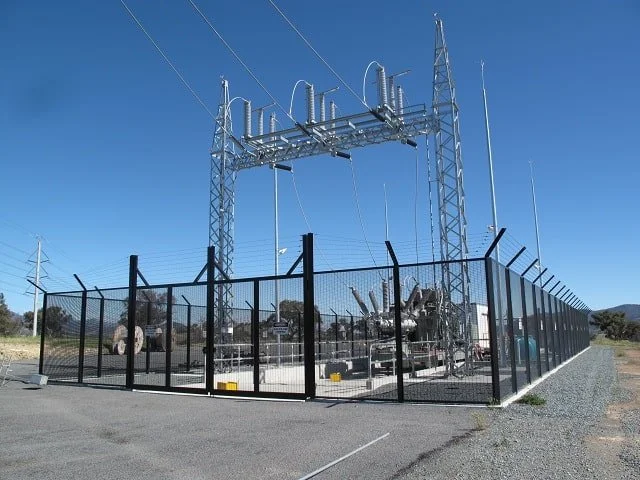
Utilities, energy providers, transportation operators, water authorities, and telecom organizations operate under immense regulatory and operational pressure. Most already invest heavily in monitoring tools, SOCs, alerting platforms, vendor threat feeds, and cyber and physical controls. Yet many incidents still trigger the same post-event question: “Were there signs we missed?” In most cases, the answer is yes.
Those signs typically appear outside traditional security tooling and in open online spaces where threat actors, activists, insiders, and opportunistic criminals communicate, research, and rehearse.
How OSINT Enables Early Warning
OSINT focuses on publicly available information, including social platforms, forums, mapping tools, code repositories, public records, satellite imagery, and open datasets. When used correctly, OSINT helps security teams move from reactive response to pre-incident detection.
Practical early-warning benefits include:
Identifying targeted reconnaissance of substations, pipelines, control facilities, or access routes
Detecting activist and protest escalation, often openly coordinated before physical action
Surfacing insider grievance signals expressed online before sabotage or violence
Spotting doxxing and intimidation campaigns against engineers, operators, and executives
Bridging cyber and physical threat intelligence where responsibility is often fragmented
OSINT does not replace alarms or sensors; it fills the time gap before alarms exist.
AI + OSINT: Scaling Early Detection
AI significantly enhances OSINT when applied responsibly and by trained analysts. Together, AI and OSINT allow teams to see patterns faster and at scale, without drowning in noise.
1. Identifying Data-Supply Vulnerabilities
Critical infrastructure relies on complex ecosystems of vendors, contractors, software providers, and logistics partners.
AI-assisted OSINT can:
Map public relationships between suppliers, contractors, and facilities
Identify exposed vendor infrastructure discussed in open forums
Flag leaked credentials, misconfigurations, or documentation tied to OT environments
Reveal dependencies that create single points of failure
This provides early visibility into data-supply and vendor risk before it manifests operationally.
2. Mapping Public Indicators of Compromise (IoCs)
Many threat actors discuss tools, access methods, vulnerabilities, and targets in public or semi-public spaces.
OSINT combined with AI can:
Surface recurring references to specific OT vendors or protocols
Track discussions about exploiting known ICS or SCADA weaknesses
Correlate public chatter with observed anomalies inside networks
Identify reconnaissance behaviors before intrusion attempts
This shortens the gap between external intent and internal detection.
3. Monitoring Adversary Chatter Feeding OT Risk
Threat actors planning disruption often talk—sometimes indirectly—about:
Facility locations
Operating schedules
On-call engineers
Physical layouts inferred from public imagery
AI helps analysts triage and prioritize this chatter, while OSINT tradecraft ensures findings are contextualized, lawful, and actionable. The result is earlier warning of threats that sit between cyber and physical security silos.
OSINT and Reduced Time-to-Detection: Real-World Use Cases
Across critical infrastructure sectors, OSINT consistently reduces time-to-detection by:
Identifying protest mobilization days before arrival at facilities
Flagging reconnaissance behaviors before physical surveillance is noticed
Surfacing insider risk signals prior to access misuse
Detecting hybrid cyber-physical planning before technical indicators trigger alerts
In practical terms, this means:
More time to posture security
Better-informed leadership decisions
Fewer surprises during incidents
Stronger post-incident justification
Why Training Matters More Than Tools
Most organizations already have access to OSINT tools or vendor feeds. What they lack is consistent analyst capability.
Without training:
Signals are reviewed in isolation
Escalation decisions vary by analyst
Noise overwhelms judgment
Vendors become a crutch instead of an asset
OSINT maturity is not a technology problem; it is a people and process problem. The teams likely already have all the tools they need, and with training, they can level up and increase effectiveness and efficiency exponentially.
The OSINT Force Multiplier (Corporate Training)
The OSINT Force Multiplier is a training-based program designed to upgrade analyst capability across security, investigations, and converged SOC teams.
It focuses on:
Basic OSINT competency
Signal interpretation and prioritization
AI-assisted analysis without over-reliance
Legal and regulatory defensibility
Practical workflows tied to real infrastructure risks
Corporate Plans (Limited-Time Offer)
10-seat bundle: $6,000
20-seat bundle: $11,000
Both plans include customized AI-assisted analytical material tailored to your operations.
📅 This offer is only available through January 2.
📩 Contact us directly at: [email protected]
Final Thought
Most critical infrastructure threats do not arrive without warning. They announce themselves quietly, publicly, and early. Organizations that train their teams to recognize and interpret those signals gain time. And in critical infrastructure security, time is everything.